Richard "Dick" Larson: A Pioneer in Operations Research, Systems Engineering, and Educational Innovation
A distinguished MIT professor whose fifty-year career in operations research, queueing theory, and educational technology has transformed how organizations analyze complex systems and make critical decisions.
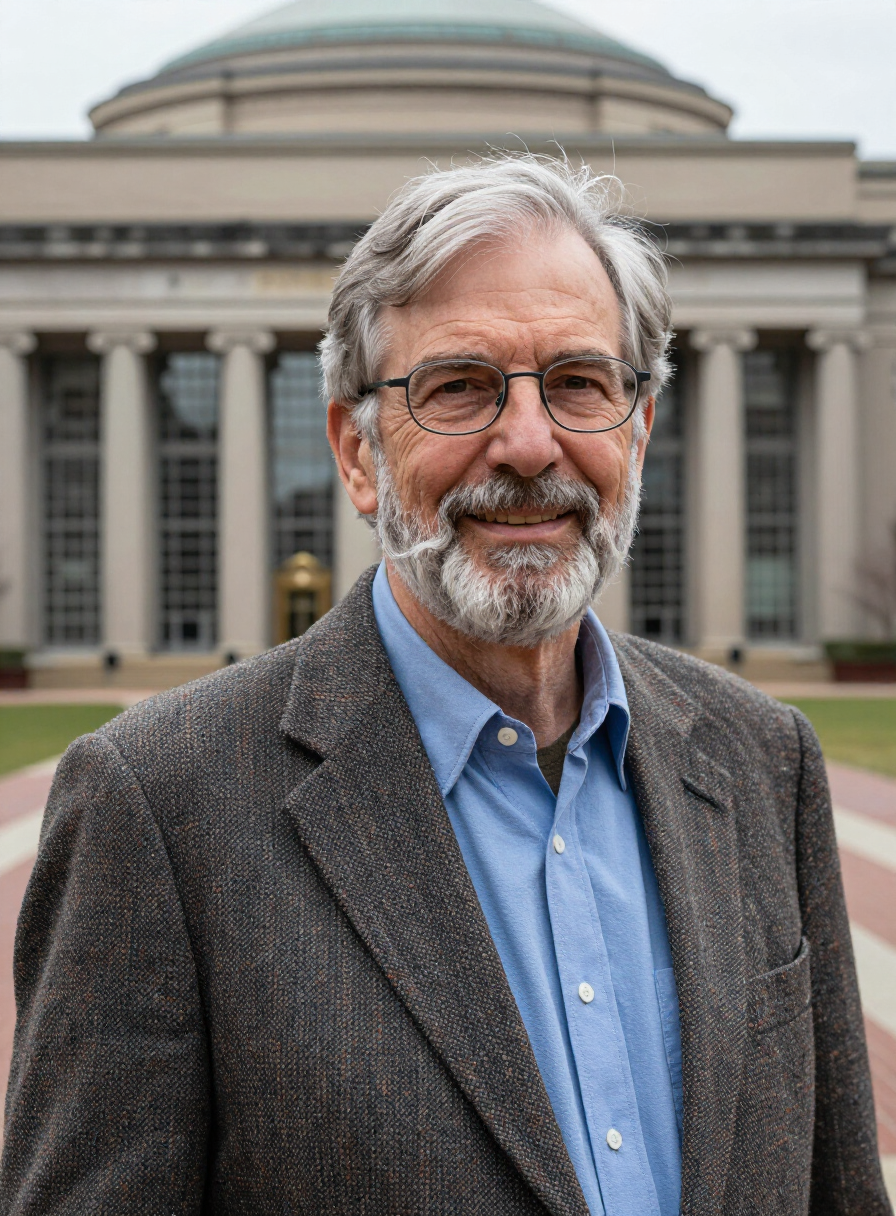
For more than five decades, Richard "Dick" Larson has stood at the forefront of operations research, systems engineering, and technology-enhanced education, earning international recognition for pioneering work that has transformed the way organizations analyze complex systems and make critical decisions. A distinguished professor at the Massachusetts Institute of Technology (MIT), Dr. Larson has devoted his career to applying mathematical modeling and analytical thinking to improve public services, advance engineering research, and make education more accessible to learners around the world.
Widely recognized as one of the foremost experts in operations research, Dr. Larson has built a legacy defined by intellectual curiosity, practical innovation, and a lifelong commitment to solving real-world problems. His groundbreaking contributions have influenced diverse fields, including emergency response systems, urban planning, queueing theory, public safety, transportation, health care, and educational technology. Through his research, teaching, and leadership, he has demonstrated how rigorous analytical methods can improve decision-making while enhancing the quality of life for communities across the globe.
Dr. Larson's relationship with MIT began as a student, where he earned his Bachelor of Science, Master of Science, and Doctor of Philosophy degrees in Operations Research. His graduate work laid the foundation for a career dedicated to understanding the complex interactions that define modern public systems. Shortly after completing his doctoral studies, he joined the MIT faculty in 1969, beginning what would become one of the Institute's longest and most distinguished academic careers.
Throughout his tenure at MIT, Dr. Larson has served as a professor within what is now the Institute for Data, Systems, and Society (IDSS), where he has educated generations of engineers, scientists, policymakers, and researchers. Known for his engaging teaching style and ability to connect sophisticated mathematical concepts with everyday applications, he has inspired countless students to pursue careers devoted to solving society's most challenging problems through data-driven analysis and systems thinking.
Among Dr. Larson's most influential contributions is his pioneering work in queueing theory—the mathematical study of waiting lines and service systems. His research fundamentally changed how organizations understand congestion, resource allocation, and service efficiency. One of his signature innovations, the Queue Inference Engine, introduced a novel method for estimating queue lengths and customer waiting times using transaction data rather than direct observation. This breakthrough has had lasting applications in transportation, banking, telecommunications, healthcare, retail, and numerous other industries where efficient service delivery is essential.
Dr. Larson's research has also significantly advanced emergency response and public safety systems. His early work examining police patrol operations helped establish new approaches for allocating emergency resources more effectively while reducing response times and improving community safety. His landmark publication, Urban Police Patrol Analysis, became a foundational reference for researchers and practitioners seeking to optimize emergency service operations through scientific analysis.
Building upon these achievements, Dr. Larson co-authored Urban Operations Research, another highly influential text that demonstrated how mathematical modeling could address complex urban planning and public policy challenges. The publication helped expand the practical application of operations research to municipal government, infrastructure planning, transportation networks, and other public systems, establishing a framework that continues to influence researchers and policymakers today.
Beyond his research accomplishments, Dr. Larson has played a central role in advancing the profession of operations research through leadership and service. He served as President of the Operations Research Society of America (ORSA), helping guide the organization during a period of continued growth and innovation. Following the merger of ORSA and The Institute of Management Sciences, he also served as President of the Institute for Operations Research and the Management Sciences (INFORMS), one of the world's leading professional organizations dedicated to analytics, operations research, and decision science. Through these leadership roles, he championed interdisciplinary collaboration while promoting the practical application of analytical methods to society's most pressing challenges.
Dr. Larson's extraordinary contributions to engineering and applied mathematics have earned him election to the National Academy of Engineering, one of the profession's highest honors. Membership in the Academy recognizes individuals whose work has made outstanding contributions to engineering research, education, and technological advancement. This distinction reflects not only the breadth of his scholarly accomplishments but also the lasting influence of his research on public systems throughout the world.
While widely recognized for his technical expertise, Dr. Larson has remained equally committed to making analytical thinking accessible beyond academia. Throughout his career, he has advocated for using mathematical models not simply as theoretical tools but as practical frameworks for improving everyday decision-making. His work consistently emphasizes that thoughtful analysis can help individuals and organizations navigate uncertainty, evaluate alternatives, and make more informed choices.
This philosophy is reflected in his 2023 book, Model Thinking for Everyday Life: How to Make Smarter Decisions. Written for a broad audience, the book demonstrates how the same modeling principles used by engineers and scientists can be applied to everyday situations, from managing personal time and finances to evaluating risks and making complex life decisions. By translating sophisticated analytical concepts into practical guidance, Dr. Larson continues his lifelong mission of helping others think more clearly, reason more effectively, and approach challenges with greater confidence.
In addition to his research and writing, Dr. Larson has been an influential mentor, educator, and collaborator throughout his career. Colleagues and students alike recognize his generosity, intellectual rigor, and enthusiasm for exploring new ideas. His ability to bridge theory and practice has enabled him to build lasting partnerships across engineering, government, education, healthcare, and industry, extending the impact of his work far beyond the classroom and research laboratory.
Throughout more than fifty years of scholarship, leadership, and public service, Richard "Dick" Larson has demonstrated the profound value of combining mathematical precision with human-centered problem solving. His pioneering research has transformed the study of operations research, improved critical public systems, and empowered generations of students and professionals to approach complex challenges with analytical confidence.
As the fields of data science, systems engineering, and artificial intelligence continue to evolve, Dr. Larson's contributions remain more relevant than ever. His career serves as an enduring testament to the power of thoughtful inquiry, interdisciplinary collaboration, and evidence-based decision-making. Through his remarkable body of work, he has helped shape modern operations research while leaving an extraordinary legacy that continues to influence engineering, education, public policy, and society at large.